Bran Flakes with Berries & Low-Fat Milk
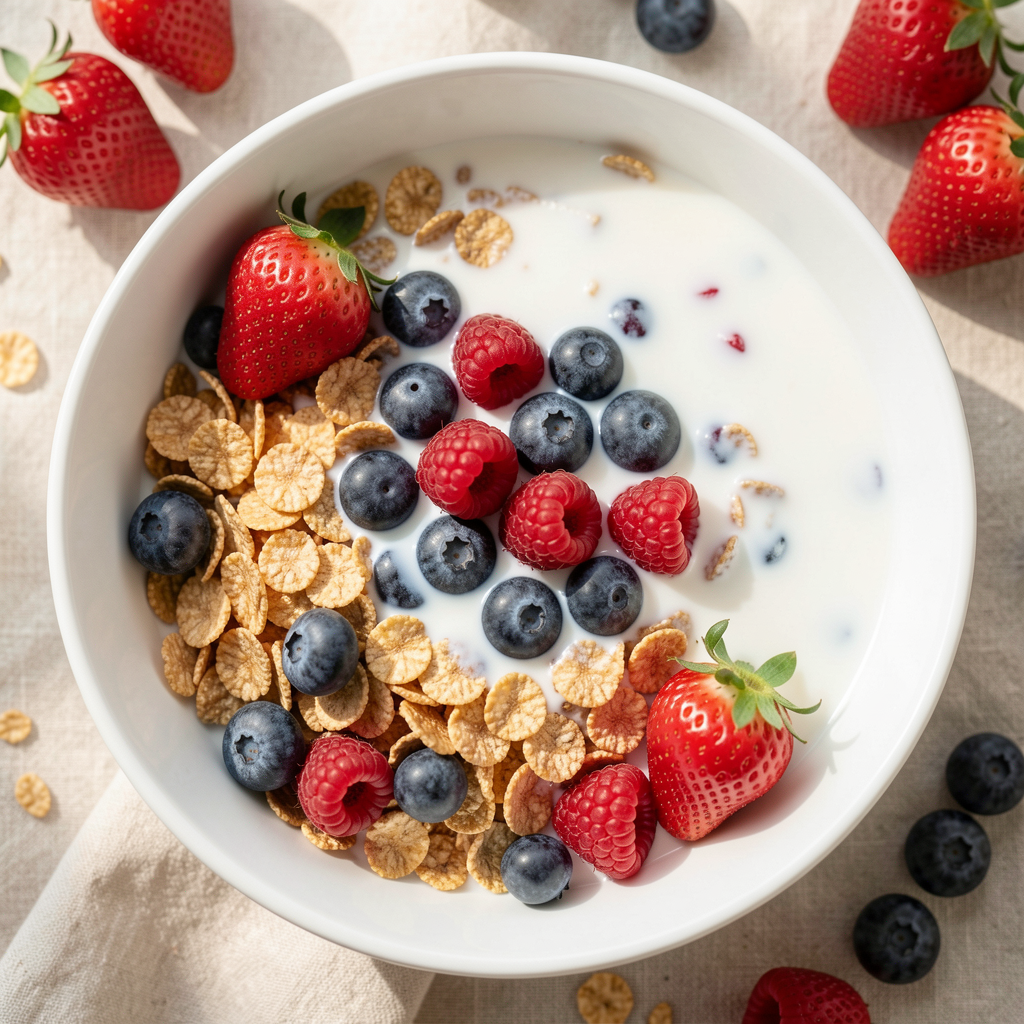
📊 Nutrition Facts (whole dish)
🛒 Ingredients
👩🍳 Cooking Instructions
🏥 Health & Wellness Notes (evidence-based)
Based on 2026 lipid guideline (Clin Res Cardiol) and current lipid management guidelines: saturated fat <7% of total calories, increased viscous fiber (10-25g/day), and omega-3 fatty acids from fish or plant sources. Plant sterols from legumes, nuts, and whole grains provide additional LDL reduction.
📚 References (2)
"Reduce saturated fat to <7% of total calories; eliminate trans fat. Increase soluble fiber (10-25g/day), plant sterols/s..."
"Therapeutic lifestyle changes (TLC) as first-line: saturated fat <7% calories, dietary cholesterol <200mg/day, increased..."
Based on the ADA Standards of Care in Diabetes—2026, this meal emphasizes low-glycemic index carbohydrates (whole grains, legumes, non-starchy vegetables) and lean protein sources, which help maintain stable postprandial glucose levels.
📚 References (2)
"Carbohydrate intake should emphasize low-glycemic index foods, non-starchy vegetables, whole fruits, legumes, and whole ..."
"Choose more non-starchy vegetables, lean meats or plant-based proteins, quality carbohydrates (whole grains, fruits, veg..."
Based on the MIND diet (Mediterranean-DASH Intervention for Neurodegenerative Delay) published in Alzheimer's & Dementia (Morris et al., 2015): green leafy vegetables, berries, nuts, whole grains, fish, poultry, and olive oil as primary fat. These foods are rich in vitamin E, folate, omega-3s, and polyphenols that protect against cognitive decline.
- Low omega-3 (0.5g), consider fatty fish
📚 References (2)
"The MIND diet score was significantly associated with slower cognitive decline. Brain-healthy food groups: green leafy v..."
"High consumption of green leafy vegetables, berries, nuts, and olive oil are linked to cognitive protection. The MIND di..."
Based on OARSI Guidelines: Mediterranean diet pattern with emphasis on anti-inflammatory foods. Omega-3 fatty acids, vitamin D, avoidance of pro-inflammatory foods. Weight management crucial.
📚 References (1)
"Introduction: osteoarthritis is a chronic disease characterized by the progressive degradation of articular cartilage, s..."
Based on NIH Office of Dietary Supplements and Bone Health & Osteoporosis Foundation: adults ≥50 years need 1000-1200mg calcium daily from diet. Vitamin D 800-1000 IU/day for absorption. Adequate protein (1.0-1.2g/kg/day) supports bone matrix maintenance. Potassium and magnesium rich foods help reduce bone resorption.
- Protein 11.8g (adequate protein supports bone matrix)
📚 References (2)
"Adults ≥50y: 1000-1200mg calcium/day from diet + supplements as needed. Vitamin D: 800-1000 IU/day. Calcium-rich foods: ..."
"A calcium-rich diet builds and protects bones. Dairy, nuts, leafy greens, and fish are good sources. Vitamin D helps cal..."
Based on the MIND diet study (Morris et al., 2015): green leafy vegetables, berries, nuts, whole grains, fish, poultry, olive oil. Rich in folate, vitamin E, omega-3s, and polyphenols.
📚 References (1)
"The Mediterranean-DASH Intervention for Neurodegenerative Delay (MIND) diet is a brain-focused dietary pattern designed ..."
Based on AHA/ACC 2022 Heart Failure Guidelines: sodium <1500-2000mg/day. Sodium and fluid recommendations should be individualized; fluid restriction may be prescribed for selected patients with congestion, hyponatremia or advanced heart failure — do not restrict fluids unless advised by the treating clinician. Emphasis on DASH-aligned eating pattern with potassium-rich foods unless contraindicated.
📚 References (1)
"The heart failure (HF) guideline's purpose is to assist medical professionals while treating patients with HF in accorda..."
Based on AGA Clinical Practice Guidelines: smaller, more frequent meals (5-6/day), limit high-fat and spicy foods. Emphasize cooked over raw vegetables, lean proteins, moderate fiber.
📚 References (1)
"Functional gastrointestinal disorders (FGID) are a group of disorders of the digestive system in which the chronic or re..."
Based on ERS/ATS Nutrition Guidelines: higher fat (35-45% calories) to reduce CO2 production. Protein 1.2-1.5g/kg to preserve respiratory muscle. Small, frequent, nutrient-dense meals.
Based on ACG Clinical Guidelines: fiber 25-30g/day from diverse sources, fluids >1.7L/day. Prunes, kiwi, psyllium, and fermented foods shown effective.
📚 References (3)
"The purpose of this American Gastroenterological Association (AGA) Institute Clinical Practice Update is to review the a..."
"Constipation poses a significant health concern affecting individuals of varying ages and geographic locations worldwide..."
"Chronic constipation (CC) remains a common gastrointestinal (GI) disorder that conveys a substantial healthcare burden. ..."