← Browse All Recipes
🍲

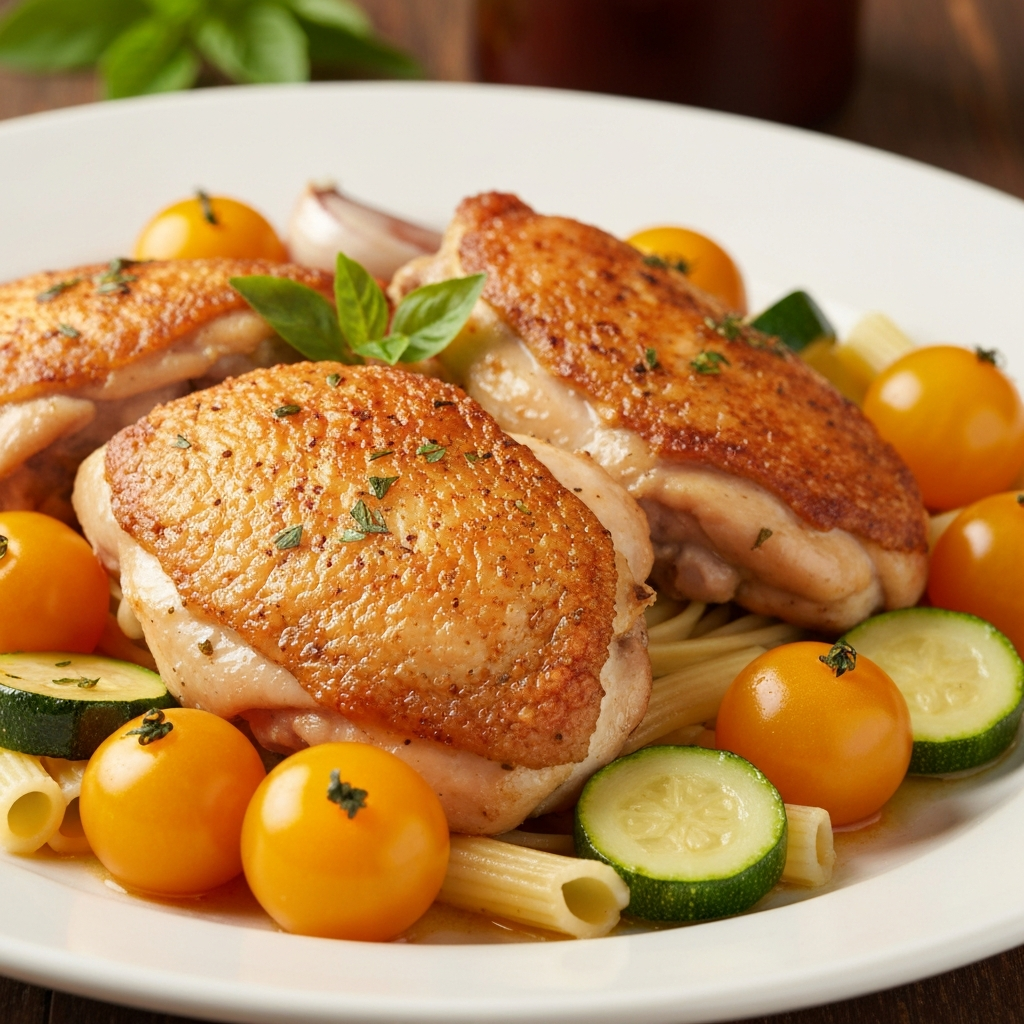
Chicken Provençal

Dinner French Medium Normal ⏱ 28 min · 👤 1 serving
🥩 Lean Protein 🧂 Low Sodium 🌊 Mediterranean 🍊 Vitamin C Rich
Chicken Provençal

📊 Nutrition Facts (whole dish)

561
Calories
40.8g
Protein
16.6g
Fat
61.9g
Carbs
8.6g
Fiber
71mg
Sodium
77mg
Calcium
5mg
Iron
1397mg
Potassium
115mg
Magnesium

🛒 Ingredients

👩‍🍳 Cooking Instructions

1
In a large skillet, heat 2 tablespoons of olive oil over medium heat. Add 4 minced garlic cloves and sauté for 1 minute until fragrant.
2
Season the 4 chicken breasts with salt and pepper. Place the chicken in the skillet and sear for 3 minutes per side until golden brown. Reduce the heat to low, cover, and cook for an additional 8-10 minutes, or until the internal temperature reaches 165°F.
3
While the chicken finishes cooking, prepare the quinoa: Rinse 1 cup of dry quinoa under cold water. In a separate pot, combine the rinsed quinoa with 2 cups of water. Bring to a boil, reduce heat immediately, cover, and simmer for exactly 15 minutes until all liquid is absorbed.
4
Once the chicken is cooked through, remove it from the skillet and set aside. Add the diced tomato, zucchini, and bell pepper to the same skillet. Cook over medium-low heat for 8 minutes, stirring occasionally, allowing the vegetables to soften and absorb the residual garlic flavor.
5
Gently return the cooked chicken breasts to the skillet with the vegetables. Simmer uncovered for an additional 5 minutes to allow the flavors to meld and reduce any excess liquid. Taste and adjust seasoning as needed.
6
Serve the Provençal mixture immediately, spooning a generous portion of the fluffy quinoa alongside the chicken and vegetable medley.

🏥 Health & Wellness Notes (evidence-based)

❤️ Hypertension-Friendly — DASH-Aligned, Low Sodium, High Potassium

Aligned with the DASH (Dietary Approaches to Stop Hypertension) eating plan as endorsed by NIH/NHLBI. Rich in potassium, calcium, magnesium, and fiber while low in sodium, saturated fat, and added sugars.

Key nutrients per serving: Sodium <600mg per meal, potassium-to-sodium ratio >1:1, calcium >200mg per serving
📚 References (2)
The DASH Diet: A Guide to Managing Hypertension Through Nutrition (StatPearls / NCBI)
"DASH diet: rich in fruits, vegetables, whole grains, low-fat dairy; limited sodium (<2300mg/day, ideally 1500mg), satura..."
NIH: DASH Diet Named Best Heart-Healthy Diet (NHLBI)
"The DASH eating plan reduces high blood pressure and LDL cholesterol. Emphasizes vegetables, fruits, whole grains, fish,..."
🩸 Diabetes-Friendly — Low Glycemic Index, Controlled Carbohydrates

Based on the ADA Standards of Care in Diabetes—2026, this meal emphasizes low-glycemic index carbohydrates (whole grains, legumes, non-starchy vegetables) and lean protein sources, which help maintain stable postprandial glucose levels.

Key nutrients per serving: Low GI foods (<55), fiber ≥3g per serving, saturated fat <10% of calories
📚 References (2)
Standards of Care in Diabetes—2026 (ADA Diabetes Care) DOI: 10.2337/dc26-SREV
"Carbohydrate intake should emphasize low-glycemic index foods, non-starchy vegetables, whole fruits, legumes, and whole ..."
ADA Diabetes & Nutrition Recommendations
"Choose more non-starchy vegetables, lean meats or plant-based proteins, quality carbohydrates (whole grains, fruits, veg..."
🎗️ Cancer Recovery Support — High Protein, Omega-3 Enriched, Easy to Digest

Based on ESPEN 2021 Clinical Nutrition in Cancer guidelines and ASCO cachexia guidelines: protein 1.2-1.5g/kg body weight/day, EPA omega-3 ~2g/day for cachexia management, energy 25-30 kcal/kg/day. Emphasizes nutrient-dense foods that are easy to digest with attention to taste changes and fatigue.

Key nutrients per serving: Protein ≥20g per meal, omega-3 EPA ≥0.5g, soft/normal texture, energy density ≥1.5 kcal/g
📚 References (2)
ESPEN Practical Guideline: Clinical Nutrition in Cancer (2021) DOI: 10.1016/j.clnu.2021.02.005
"Cancer patients: protein intake 1.0-1.5 g/kg/day (≥1.2 g/kg in catabolic states); energy 25-30 kcal/kg/day. EPA omega-3 ..."
Nutritional Approach to Cancer Cachexia (PMC 2022) DOI: 10.3390/nu14030568
"EPA recommended intake ~2g/day for cancer cachexia. High-protein diet (≥1.2g/kg/day), omega-3 fatty acids, and antioxida..."
💔 Heart Failure — Low Sodium, Fluid-Conscious, Potassium-Balanced

Based on AHA/ACC 2022 Heart Failure Guidelines: sodium <1500-2000mg/day. Sodium and fluid recommendations should be individualized; fluid restriction may be prescribed for selected patients with congestion, hyponatremia or advanced heart failure — do not restrict fluids unless advised by the treating clinician. Emphasis on DASH-aligned eating pattern with potassium-rich foods unless contraindicated.

Key nutrients per serving: Sodium <400mg per meal, saturated fat <5g, fluid-dense foods balanced
📚 References (1)
Lifestyle Modification in Heart Failure Management: Are We Using Evidence-Based Recommendations in Real World Practice? (International journal of heart failure, 2023) DOI: 10.36628/ijhf.2022.0032
"The heart failure (HF) guideline's purpose is to assist medical professionals while treating patients with HF in accorda..."
🍵 Gentle Digestion — Small Portions, Low Acid, Soft Texture, Easy to Digest

Based on AGA Clinical Practice Guidelines: smaller, more frequent meals (5-6/day), limit high-fat and spicy foods. Emphasize cooked over raw vegetables, lean proteins, moderate fiber.

Key nutrients per serving: Fat <20g per meal, fiber 3-5g, soft texture, small portion size, non-acidic
📚 References (1)
Prevalence of functional gastrointestinal disorders in Taiwan: questionnaire-based survey for adults based on the Rome III criteria. (Asia Pacific journal of clinical nutrition, 2012)
"Functional gastrointestinal disorders (FGID) are a group of disorders of the digestive system in which the chronic or re..."
🫁 COPD Support — High Healthy Fat, Adequate Protein, Easy to Digest

Based on ERS/ATS Nutrition Guidelines: higher fat (35-45% calories) to reduce CO2 production. Protein 1.2-1.5g/kg to preserve respiratory muscle. Small, frequent, nutrient-dense meals.

Key nutrients per serving: Protein >20g, healthy fats 15-20g, fiber 3-5g, easy to chew and swallow
💪 Sarcopenia Prevention — High Protein, Leucine-Rich, Vitamin D

Based on ESPEN 2024 Sarcopenia Guidelines: protein 1.2-1.5g/kg/day with 25-30g per meal. Vitamin D 800-1000 IU/day. Resistance exercise paired with protein intake.

Key nutrients per serving: Protein >25g per meal, vitamin D sources, calcium >200mg, energy >400kcal
📚 References (3)
Protein intake and exercise for optimal muscle function with aging: recommendations from the ESPEN Expert Group. (Clinical nutrition (Edinburgh, Scotland), 2014) DOI: 10.1016/j.clnu.2014.04.007
"The aging process is associated with gradual and progressive loss of muscle mass along with lowered strength and physica..."
Nutritional intake and diet quality over three years following liver transplantation. (Clinical nutrition ESPEN, 2025) DOI: 10.1016/j.clnesp.2025.06.026
"Recipients of liver transplantation (LT) are at high risk of malnutrition, sarcopenia and cardiovascular disease, yet no..."
Muscle Strength and Phase Angle Are Potential Markers for the Efficacy of Multidisciplinary Weight-Loss Program in Patients with Sarcopenic Obesity. (Journal of clinical medicine, 2024) DOI: 10.3390/jcm13175237
"..."
🩹 Wound Healing — Very High Protein, Zinc, Vitamin C, Vitamin A

Based on NPUAP/EPUAP 2019 Guidelines: protein 1.25-1.5g/kg/day, energy 30-35 kcal/kg/day. Vitamin C 500mg, zinc 15-30mg, vitamin A for collagen synthesis.

Key nutrients per serving: Protein >25g per meal, vitamin C-rich foods, zinc >5mg, vitamin A sources
📚 References (1)
Nutritional treatment of pressure ulcers: what is the evidence? (Journal of the American Association of Nurse Practitioners, 2013) DOI: 10.1002/2327-6924.12025
"To review the literature on the nutritional treatment of pressure ulcers, with an emphasis on long-term care issues. The..."
🌾 Constipation Relief — High Fiber, Adequate Fluids, Probiotic-Rich

Based on ACG Clinical Guidelines: fiber 25-30g/day from diverse sources, fluids >1.7L/day. Prunes, kiwi, psyllium, and fermented foods shown effective.

Key nutrients per serving: Fiber >5g per meal, fluids, probiotics, magnesium >50mg, whole grains present
📚 References (3)
AGA Clinical Practice Update on Pregnancy-Related Gastrointestinal and Liver Disease: Expert Review. (Gastroenterology, 2024) DOI: 10.1053/j.gastro.2024.06.014
"The purpose of this American Gastroenterological Association (AGA) Institute Clinical Practice Update is to review the a..."
Impact of resistant starch type 3 on fecal microbiota and stool frequency in Thai adults with chronic constipation randomized clinical trial. (Scientific reports, 2024) DOI: 10.1038/s41598-024-79465-1
"Constipation poses a significant health concern affecting individuals of varying ages and geographic locations worldwide..."
Short-Term Daily Intake of Polydextrose Fiber Does Not Shorten Intestinal Transit Time in Constipated Adults: A Randomized Controlled Trial. (Nutrients, 2018) DOI: 10.3390/nu10070920
"Chronic constipation (CC) remains a common gastrointestinal (GI) disorder that conveys a substantial healthcare burden. ..."
⚠️ This information is for reference only. Always consult your healthcare provider or registered dietitian before making dietary changes. Not medical advice.
🖨️ Print / Save Recipe
NutriHearth Family Nutrition Assistant · Evidence-based recipe · Generated for demo purposes · Not medical advice