← Browse All Recipes
🍲

Creamy Mushroom Risotto
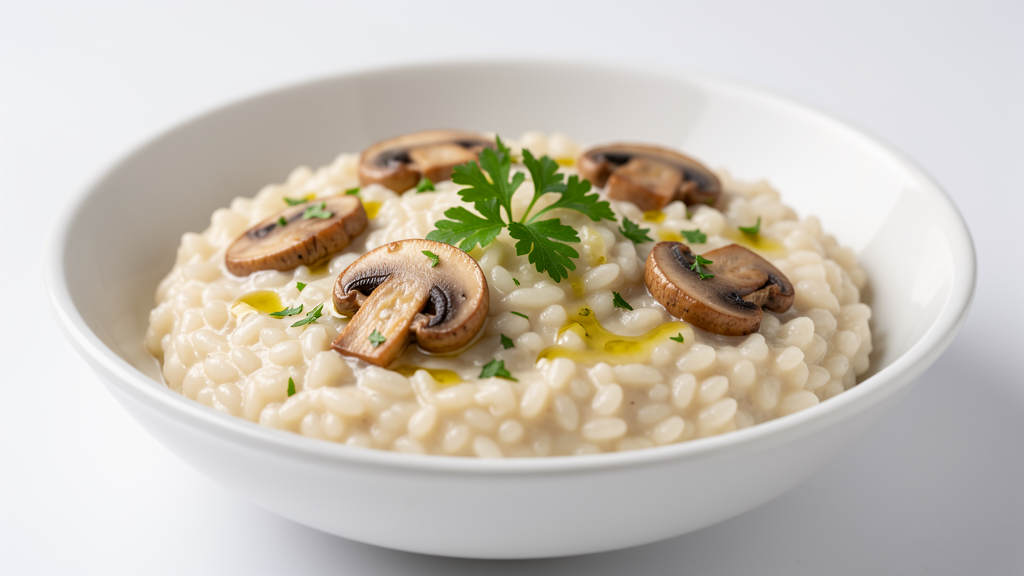
Dinner Italian Medium Soft ⏱ 35 min · 👤 1 serving
🌾 High Fiber 🦴 High Calcium 🤗 Comfort Food
Creamy Mushroom Risotto

📊 Nutrition Facts (whole dish)

640
Calories
39.6g
Protein
21.7g
Fat
75.5g
Carbs
8.1g
Fiber
69mg
Sodium
667mg
Calcium
4mg
Iron
1067mg
Potassium
124mg
Magnesium
0.9g
Omega-3

🛒 Ingredients

Firm Tofucooked80g

👩‍🍳 Cooking Instructions

1
Sauté 1 cup sliced white mushrooms, 1/2 chopped yellow onion, 2 cloves minced garlic, and 2 tbsp extra virgin olive oil in a large skillet over medium heat until softened (about 5-7 minutes). Add 1 chicken breast (cut into bite-sized pieces) and cook until browned and cooked through to an internal temperature of 165°F (about 5-6 minutes).
2
Add 1 cup brown rice to the skillet and toast for 2 minutes, stirring constantly until the edges begin to crisp.
3
Gradually add 4 cups of warm water (or low-sodium broth if available), stirring frequently and simmering for about 20 minutes until the liquid is absorbed and the risotto is creamy. Stir in 1/2 cup low-fat milk and season with black pepper and salt to taste; cook for an additional 5 minutes until thickened.
4
Add 1/2 cup crumbled firm tofu to the skillet and stir until heated through (about 3 minutes). Stir in 1 tbsp chia seeds and cook for 1 minute until fully incorporated.

🏥 Health & Wellness Notes (evidence-based)

🎗️ Cancer Recovery Support — High Protein, Omega-3 Enriched, Easy to Digest

Based on ESPEN 2021 Clinical Nutrition in Cancer guidelines and ASCO cachexia guidelines: protein 1.2-1.5g/kg body weight/day, EPA omega-3 ~2g/day for cachexia management, energy 25-30 kcal/kg/day. Emphasizes nutrient-dense foods that are easy to digest with attention to taste changes and fatigue.

Key nutrients per serving: Protein ≥20g per meal, omega-3 EPA ≥0.5g, soft/normal texture, energy density ≥1.5 kcal/g
📚 References (2)
ESPEN Practical Guideline: Clinical Nutrition in Cancer (2021) DOI: 10.1016/j.clnu.2021.02.005
"Cancer patients: protein intake 1.0-1.5 g/kg/day (≥1.2 g/kg in catabolic states); energy 25-30 kcal/kg/day. EPA omega-3 ..."
Nutritional Approach to Cancer Cachexia (PMC 2022) DOI: 10.3390/nu14030568
"EPA recommended intake ~2g/day for cancer cachexia. High-protein diet (≥1.2g/kg/day), omega-3 fatty acids, and antioxida..."
🦴 Bone Health — Calcium-Rich, Vitamin D, High-Quality Protein

Based on NIH Office of Dietary Supplements and Bone Health & Osteoporosis Foundation: adults ≥50 years need 1000-1200mg calcium daily from diet. Vitamin D 800-1000 IU/day for absorption. Adequate protein (1.0-1.2g/kg/day) supports bone matrix maintenance. Potassium and magnesium rich foods help reduce bone resorption.

Key nutrients per serving: Calcium ≥300mg per meal, protein ≥15g, vitamin D sources included, magnesium ≥50mg
📚 References (2)
Calcium - Health Professional Fact Sheet (NIH ODS)
"Adults ≥50y: 1000-1200mg calcium/day from diet + supplements as needed. Vitamin D: 800-1000 IU/day. Calcium-rich foods: ..."
Bone Health & Osteoporosis Foundation: Calcium & Vitamin D
"A calcium-rich diet builds and protects bones. Dairy, nuts, leafy greens, and fish are good sources. Vitamin D helps cal..."
🦿 Joint Health — Anti-Inflammatory, Omega-3 Rich, Antioxidant

Based on OARSI Guidelines: Mediterranean diet pattern with emphasis on anti-inflammatory foods. Omega-3 fatty acids, vitamin D, avoidance of pro-inflammatory foods. Weight management crucial.

Key nutrients per serving: Omega-3 >1g, vitamin D, antioxidants, fiber >5g, whole grains, olive oil
📚 References (1)
[Nutritional guidelines for the improvement of patients with osteoarthritis]. (Nutricion hospitalaria, 2025) DOI: 10.20960/nh.06096
"Introduction: osteoarthritis is a chronic disease characterized by the progressive degradation of articular cartilage, s..."
🧩 Parkinson's Support — High Fiber, Adequate Protein Timing, Antioxidant-Rich

Based on Parkinson's Foundation Guidelines: high fiber (25-35g/day) for GI motility, protein timing for levodopa, antioxidant-rich foods. Mediterranean diet pattern recommended.

Key nutrients per serving: Fiber >5g per meal, antioxidants, fluids, balanced protein 15-25g per meal
💔 Heart Failure — Low Sodium, Fluid-Conscious, Potassium-Balanced

Based on AHA/ACC 2022 Heart Failure Guidelines: sodium <1500-2000mg/day. Sodium and fluid recommendations should be individualized; fluid restriction may be prescribed for selected patients with congestion, hyponatremia or advanced heart failure — do not restrict fluids unless advised by the treating clinician. Emphasis on DASH-aligned eating pattern with potassium-rich foods unless contraindicated.

Key nutrients per serving: Sodium <400mg per meal, saturated fat <5g, fluid-dense foods balanced
📚 References (1)
Lifestyle Modification in Heart Failure Management: Are We Using Evidence-Based Recommendations in Real World Practice? (International journal of heart failure, 2023) DOI: 10.36628/ijhf.2022.0032
"The heart failure (HF) guideline's purpose is to assist medical professionals while treating patients with HF in accorda..."
🍵 Gentle Digestion — Small Portions, Low Acid, Soft Texture, Easy to Digest

Based on AGA Clinical Practice Guidelines: smaller, more frequent meals (5-6/day), limit high-fat and spicy foods. Emphasize cooked over raw vegetables, lean proteins, moderate fiber.

Key nutrients per serving: Fat <20g per meal, fiber 3-5g, soft texture, small portion size, non-acidic
📚 References (1)
Prevalence of functional gastrointestinal disorders in Taiwan: questionnaire-based survey for adults based on the Rome III criteria. (Asia Pacific journal of clinical nutrition, 2012)
"Functional gastrointestinal disorders (FGID) are a group of disorders of the digestive system in which the chronic or re..."
🫁 COPD Support — High Healthy Fat, Adequate Protein, Easy to Digest

Based on ERS/ATS Nutrition Guidelines: higher fat (35-45% calories) to reduce CO2 production. Protein 1.2-1.5g/kg to preserve respiratory muscle. Small, frequent, nutrient-dense meals.

Key nutrients per serving: Protein >20g, healthy fats 15-20g, fiber 3-5g, easy to chew and swallow
💪 Sarcopenia Prevention — High Protein, Leucine-Rich, Vitamin D

Based on ESPEN 2024 Sarcopenia Guidelines: protein 1.2-1.5g/kg/day with 25-30g per meal. Vitamin D 800-1000 IU/day. Resistance exercise paired with protein intake.

Key nutrients per serving: Protein >25g per meal, vitamin D sources, calcium >200mg, energy >400kcal
📚 References (3)
Protein intake and exercise for optimal muscle function with aging: recommendations from the ESPEN Expert Group. (Clinical nutrition (Edinburgh, Scotland), 2014) DOI: 10.1016/j.clnu.2014.04.007
"The aging process is associated with gradual and progressive loss of muscle mass along with lowered strength and physica..."
Nutritional intake and diet quality over three years following liver transplantation. (Clinical nutrition ESPEN, 2025) DOI: 10.1016/j.clnesp.2025.06.026
"Recipients of liver transplantation (LT) are at high risk of malnutrition, sarcopenia and cardiovascular disease, yet no..."
Muscle Strength and Phase Angle Are Potential Markers for the Efficacy of Multidisciplinary Weight-Loss Program in Patients with Sarcopenic Obesity. (Journal of clinical medicine, 2024) DOI: 10.3390/jcm13175237
"..."
🩹 Wound Healing — Very High Protein, Zinc, Vitamin C, Vitamin A

Based on NPUAP/EPUAP 2019 Guidelines: protein 1.25-1.5g/kg/day, energy 30-35 kcal/kg/day. Vitamin C 500mg, zinc 15-30mg, vitamin A for collagen synthesis.

Key nutrients per serving: Protein >25g per meal, vitamin C-rich foods, zinc >5mg, vitamin A sources
📚 References (1)
Nutritional treatment of pressure ulcers: what is the evidence? (Journal of the American Association of Nurse Practitioners, 2013) DOI: 10.1002/2327-6924.12025
"To review the literature on the nutritional treatment of pressure ulcers, with an emphasis on long-term care issues. The..."
⚠️ This information is for reference only. Always consult your healthcare provider or registered dietitian before making dietary changes. Not medical advice.
🖨️ Print / Save Recipe
NutriHearth Family Nutrition Assistant · Evidence-based recipe · Generated for demo purposes · Not medical advice