← Browse All Recipes
🍎

Kale & Sesame Chips (MIND Diet)
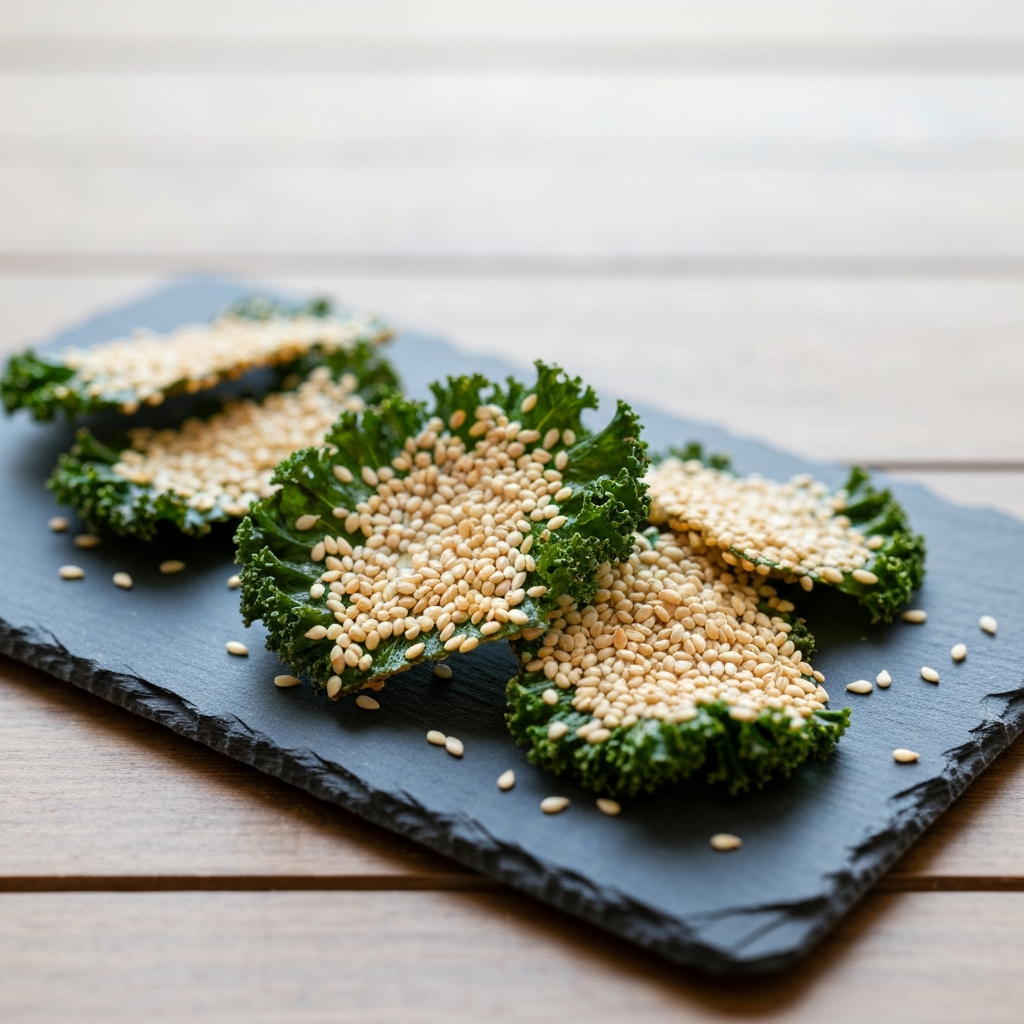
Snack American Easy Normal ⏱ 15 min · 👤 1 serving
🦴 High Calcium 🫐 Antioxidant Rich 🐟 Rich in Omega-3 🌱 Vegan
Kale & Sesame Chips (MIND Diet)

📊 Nutrition Facts (whole dish)

192
Calories
8.8g
Protein
11.1g
Fat
15.2g
Carbs
5.8g
Fiber
56mg
Sodium
308mg
Calcium
3mg
Iron
376mg
Potassium
72mg
Magnesium
0.9g
Omega-3

🛒 Ingredients

👩‍🍳 Cooking Instructions

1
Tear 1 bunch of kale into bite-sized pieces. In a large bowl, toss the kale with 2 tablespoons of olive oil, 1 tablespoon of sesame seeds, and 1 teaspoon of chia seeds until all leaves are evenly coated.
2
Spread the coated kale onto a baking sheet lined with parchment paper. Bake at 350°F (175°C) for 12 minutes, or until crisp and golden brown. Remove from oven and allow to cool completely.
3
While the chips bake, combine 1 cup of rolled oats and 2 cups of lowfat milk in a medium saucepan. Cook over medium heat, stirring frequently, for exactly 5-7 minutes, until the mixture thickens considerably.
4
Remove the saucepan from the heat source. Immediately stir in 1 cup of Greek Yogurt until no streaks remain. Season with a pinch of salt and mix thoroughly.
5
Serve the cooled Kale & Sesame Chips alongside the warm Greek Yogurt and Oat mixture for dipping.

🏥 Health & Wellness Notes (evidence-based)

🩸 Diabetes-Friendly — Low Glycemic Index, Controlled Carbohydrates

Based on the ADA Standards of Care in Diabetes—2026, this meal emphasizes low-glycemic index carbohydrates (whole grains, legumes, non-starchy vegetables) and lean protein sources, which help maintain stable postprandial glucose levels.

Key nutrients per serving: Low GI foods (<55), fiber ≥3g per serving, saturated fat <10% of calories
📚 References (2)
Standards of Care in Diabetes—2026 (ADA Diabetes Care) DOI: 10.2337/dc26-SREV
"Carbohydrate intake should emphasize low-glycemic index foods, non-starchy vegetables, whole fruits, legumes, and whole ..."
ADA Diabetes & Nutrition Recommendations
"Choose more non-starchy vegetables, lean meats or plant-based proteins, quality carbohydrates (whole grains, fruits, veg..."
🧠 Brain-Health (MIND Diet) — Antioxidant-Rich, Omega-3, B-Vitamins

Based on the MIND diet (Mediterranean-DASH Intervention for Neurodegenerative Delay) published in Alzheimer's & Dementia (Morris et al., 2015): green leafy vegetables, berries, nuts, whole grains, fish, poultry, and olive oil as primary fat. These foods are rich in vitamin E, folate, omega-3s, and polyphenols that protect against cognitive decline.

Key nutrients per serving: Green leafy vegetables present, berries or polyphenol-rich fruit, omega-3 EPA+DHA ≥500mg, vitamin E ≥5mg
⚠️ Verification Notes:
  • No berries (MIND recommends ≥2 servings/week)
  • No nuts or fish (key MIND food groups)
📚 References (2)
MIND Diet Slows Cognitive Decline with Aging (Morris et al., 2015) DOI: 10.1016/j.jalz.2014.11.009
"The MIND diet score was significantly associated with slower cognitive decline. Brain-healthy food groups: green leafy v..."
Trial of the MIND Diet for Prevention of Cognitive Decline (NEJM 2023) DOI: 10.1056/NEJMoa2302368
"High consumption of green leafy vegetables, berries, nuts, and olive oil are linked to cognitive protection. The MIND di..."
🦿 Joint Health — Anti-Inflammatory, Omega-3 Rich, Antioxidant

Based on OARSI Guidelines: Mediterranean diet pattern with emphasis on anti-inflammatory foods. Omega-3 fatty acids, vitamin D, avoidance of pro-inflammatory foods. Weight management crucial.

Key nutrients per serving: Omega-3 >1g, vitamin D, antioxidants, fiber >5g, whole grains, olive oil
📚 References (1)
[Nutritional guidelines for the improvement of patients with osteoarthritis]. (Nutricion hospitalaria, 2025) DOI: 10.20960/nh.06096
"Introduction: osteoarthritis is a chronic disease characterized by the progressive degradation of articular cartilage, s..."
🦴 Bone Health — Calcium-Rich, Vitamin D, High-Quality Protein

Based on NIH Office of Dietary Supplements and Bone Health & Osteoporosis Foundation: adults ≥50 years need 1000-1200mg calcium daily from diet. Vitamin D 800-1000 IU/day for absorption. Adequate protein (1.0-1.2g/kg/day) supports bone matrix maintenance. Potassium and magnesium rich foods help reduce bone resorption.

Key nutrients per serving: Calcium ≥300mg per meal, protein ≥15g, vitamin D sources included, magnesium ≥50mg
⚠️ Verification Notes:
  • Protein 8.8g (adequate protein supports bone matrix)
📚 References (2)
Calcium - Health Professional Fact Sheet (NIH ODS)
"Adults ≥50y: 1000-1200mg calcium/day from diet + supplements as needed. Vitamin D: 800-1000 IU/day. Calcium-rich foods: ..."
Bone Health & Osteoporosis Foundation: Calcium & Vitamin D
"A calcium-rich diet builds and protects bones. Dairy, nuts, leafy greens, and fish are good sources. Vitamin D helps cal..."
🧠 Alzheimer's Support — MIND Diet, Antioxidant-Rich, Omega-3, B-Vitamins

Based on the MIND diet study (Morris et al., 2015): green leafy vegetables, berries, nuts, whole grains, fish, poultry, olive oil. Rich in folate, vitamin E, omega-3s, and polyphenols.

Key nutrients per serving: Green leafy vegetables, berries present, omega-3 >500mg, vitamin E >5mg
📚 References (1)
Effects of the MIND Diet on the Cognitive Function of Older Adults: A Systematic Review. (Clinical nutrition research, 2025) DOI: 10.7762/cnr.2025.14.4.318
"The Mediterranean-DASH Intervention for Neurodegenerative Delay (MIND) diet is a brain-focused dietary pattern designed ..."
💔 Heart Failure — Low Sodium, Fluid-Conscious, Potassium-Balanced

Based on AHA/ACC 2022 Heart Failure Guidelines: sodium <1500-2000mg/day. Sodium and fluid recommendations should be individualized; fluid restriction may be prescribed for selected patients with congestion, hyponatremia or advanced heart failure — do not restrict fluids unless advised by the treating clinician. Emphasis on DASH-aligned eating pattern with potassium-rich foods unless contraindicated.

Key nutrients per serving: Sodium <400mg per meal, saturated fat <5g, fluid-dense foods balanced
📚 References (1)
Lifestyle Modification in Heart Failure Management: Are We Using Evidence-Based Recommendations in Real World Practice? (International journal of heart failure, 2023) DOI: 10.36628/ijhf.2022.0032
"The heart failure (HF) guideline's purpose is to assist medical professionals while treating patients with HF in accorda..."
🍵 Gentle Digestion — Small Portions, Low Acid, Soft Texture, Easy to Digest

Based on AGA Clinical Practice Guidelines: smaller, more frequent meals (5-6/day), limit high-fat and spicy foods. Emphasize cooked over raw vegetables, lean proteins, moderate fiber.

Key nutrients per serving: Fat <20g per meal, fiber 3-5g, soft texture, small portion size, non-acidic
📚 References (1)
Prevalence of functional gastrointestinal disorders in Taiwan: questionnaire-based survey for adults based on the Rome III criteria. (Asia Pacific journal of clinical nutrition, 2012)
"Functional gastrointestinal disorders (FGID) are a group of disorders of the digestive system in which the chronic or re..."
🌾 Constipation Relief — High Fiber, Adequate Fluids, Probiotic-Rich

Based on ACG Clinical Guidelines: fiber 25-30g/day from diverse sources, fluids >1.7L/day. Prunes, kiwi, psyllium, and fermented foods shown effective.

Key nutrients per serving: Fiber >5g per meal, fluids, probiotics, magnesium >50mg, whole grains present
📚 References (3)
AGA Clinical Practice Update on Pregnancy-Related Gastrointestinal and Liver Disease: Expert Review. (Gastroenterology, 2024) DOI: 10.1053/j.gastro.2024.06.014
"The purpose of this American Gastroenterological Association (AGA) Institute Clinical Practice Update is to review the a..."
Impact of resistant starch type 3 on fecal microbiota and stool frequency in Thai adults with chronic constipation randomized clinical trial. (Scientific reports, 2024) DOI: 10.1038/s41598-024-79465-1
"Constipation poses a significant health concern affecting individuals of varying ages and geographic locations worldwide..."
Short-Term Daily Intake of Polydextrose Fiber Does Not Shorten Intestinal Transit Time in Constipated Adults: A Randomized Controlled Trial. (Nutrients, 2018) DOI: 10.3390/nu10070920
"Chronic constipation (CC) remains a common gastrointestinal (GI) disorder that conveys a substantial healthcare burden. ..."
⚠️ This information is for reference only. Always consult your healthcare provider or registered dietitian before making dietary changes. Not medical advice.
🖨️ Print / Save Recipe
NutriHearth Family Nutrition Assistant · Evidence-based recipe · Generated for demo purposes · Not medical advice