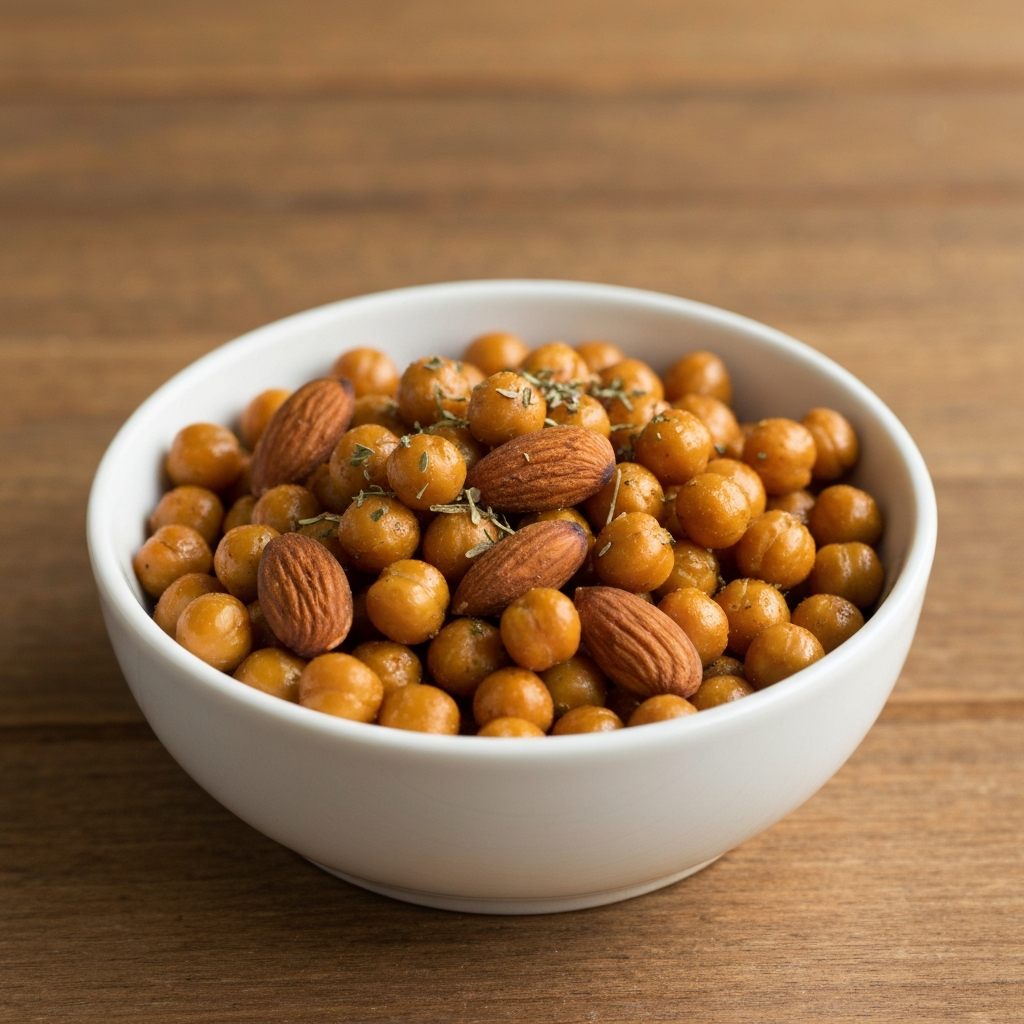
Roasted Chickpea Snack Mix
📊 Nutrition Facts (per serving)
🛒 Ingredients
👩🍳 Cooking Instructions
🏥 Health & Wellness Notes (evidence-based)
Based on the ADA Standards of Care in Diabetes—2026, this meal emphasizes low-glycemic index carbohydrates (whole grains, legumes, non-starchy vegetables) and lean protein sources, which help maintain stable postprandial glucose levels.
📚 References (2)
"Carbohydrate intake should emphasize low-glycemic index foods, non-starchy vegetables, whole fruits, legumes, and whole ..."
"Choose more non-starchy vegetables, lean meats or plant-based proteins, quality carbohydrates (whole grains, fruits, veg..."
Based on NCEP ATP III and current lipid management guidelines: saturated fat <7% of total calories, increased viscous fiber (10-25g/day), and omega-3 fatty acids from fish or plant sources. Plant sterols from legumes, nuts, and whole grains provide additional LDL reduction.
📚 References (2)
"Reduce saturated fat to <7% of total calories; eliminate trans fat. Increase soluble fiber (10-25g/day), plant sterols/s..."
"Therapeutic lifestyle changes (TLC) as first-line: saturated fat <7% calories, dietary cholesterol <200mg/day, increased..."
Aligned with the DASH (Dietary Approaches to Stop Hypertension) eating plan as endorsed by NIH/NHLBI. Rich in potassium, calcium, magnesium, and fiber while low in sodium, saturated fat, and added sugars.
- Potassium 238mg is low (need more fruits/vegetables)
📚 References (2)
"DASH diet: rich in fruits, vegetables, whole grains, low-fat dairy; limited sodium (<2300mg/day, ideally 1500mg), satura..."
"The DASH eating plan reduces high blood pressure and LDL cholesterol. Emphasizes vegetables, fruits, whole grains, fish,..."
Based on OARSI Guidelines: Mediterranean diet pattern with emphasis on anti-inflammatory foods. Omega-3 fatty acids, vitamin D, avoidance of pro-inflammatory foods. Weight management crucial.
📚 References (1)
"Introduction: osteoarthritis is a chronic disease characterized by the progressive degradation of articular cartilage, s..."
Based on AHA/ACC 2022 Heart Failure Guidelines: sodium <1500-2000mg/day, fluid restriction 1.5-2L/day as needed. Emphasis on DASH-aligned eating pattern with potassium-rich foods unless contraindicated.
📚 References (1)
"The heart failure (HF) guideline's purpose is to assist medical professionals while treating patients with HF in accorda..."
Based on AGA Clinical Practice Guidelines: smaller, more frequent meals (5-6/day), limit high-fat and spicy foods. Emphasize cooked over raw vegetables, lean proteins, moderate fiber.
📚 References (1)
"Functional gastrointestinal disorders (FGID) are a group of disorders of the digestive system in which the chronic or re..."
Based on KDIGO 2024 CKD Guidelines: protein 0.8g/kg for non-dialysis, sodium <2000mg/day, potassium adjusted per serum levels. Emphasis on high-quality protein sources, plant-based options, and phosphorus management.
- Protein 10g low for CKD stage 1-3
📚 References (3)
"The Kidney Disease: Improving Global Outcomes (KDIGO) Clinical Practice Guideline for the Evaluation and Management of C..."
"Chronic kidney disease (low estimated glomerular filtration rate [eGFR] or albuminuria) affects approximately 14% of adu..."
"Malnutrition, encompassing both undernutrition and overnutrition, is prevalent among patients with chronic kidney diseas..."
Based on ACG Clinical Guidelines: fiber 25-30g/day from diverse sources, fluids >1.7L/day. Prunes, kiwi, psyllium, and fermented foods shown effective.
📚 References (3)
"The purpose of this American Gastroenterological Association (AGA) Institute Clinical Practice Update is to review the a..."
"Constipation poses a significant health concern affecting individuals of varying ages and geographic locations worldwide..."
"Chronic constipation (CC) remains a common gastrointestinal (GI) disorder that conveys a substantial healthcare burden. ..."