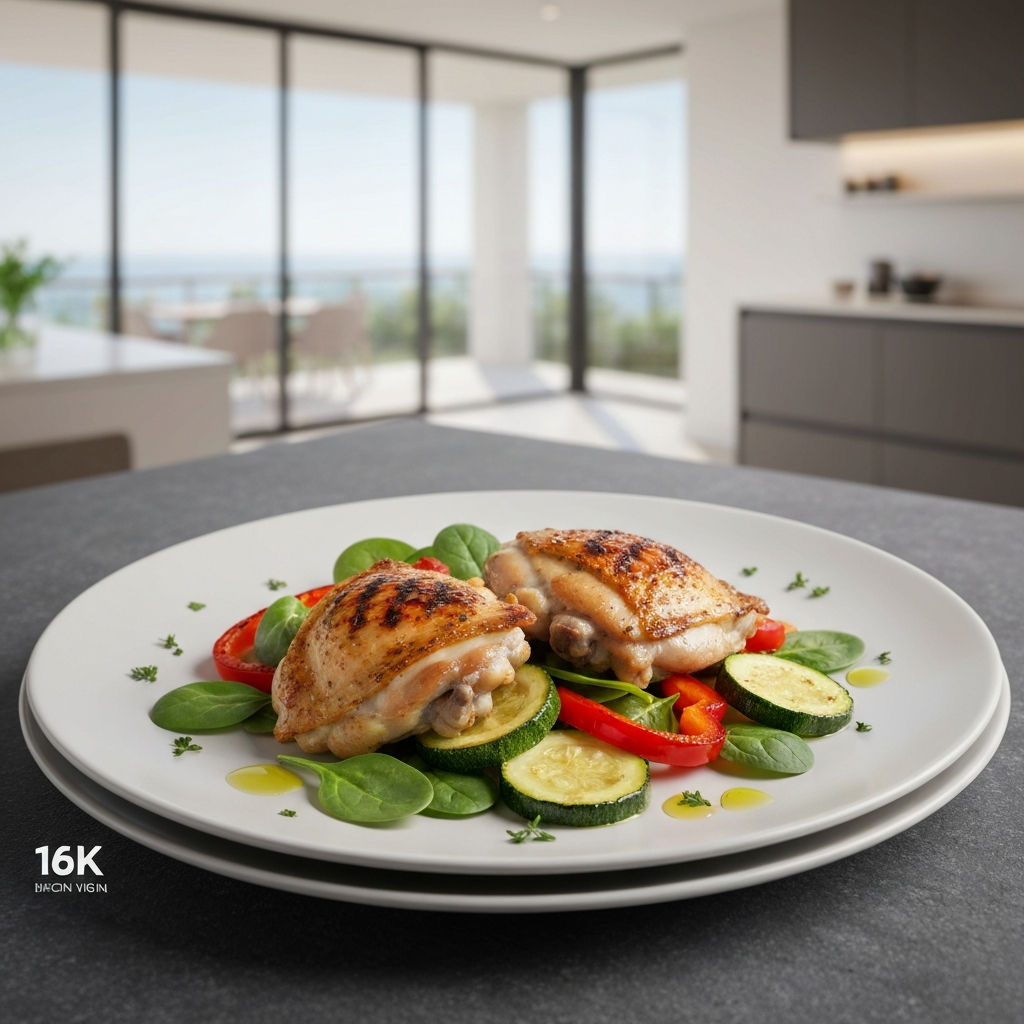
Grilled Chicken Thigh & Roasted Vegetable Salad
📊 Nutrition Facts (per serving)
🛒 Ingredients
👩🍳 Cooking Instructions
🏥 Health & Wellness Notes (evidence-based)
Based on ESPEN 2021 Clinical Nutrition in Cancer guidelines and ASCO cachexia guidelines: protein 1.2-1.5g/kg body weight/day, EPA omega-3 ~2g/day for cachexia management, energy 25-30 kcal/kg/day. Emphasizes nutrient-dense foods that are easy to digest with attention to taste changes and fatigue.
📚 References (2)
"Cancer patients: protein intake 1.0-1.5 g/kg/day (≥1.2 g/kg in catabolic states); energy 25-30 kcal/kg/day. EPA omega-3 ..."
"EPA recommended intake ~2g/day for cancer cachexia. High-protein diet (≥1.2g/kg/day), omega-3 fatty acids, and antioxida..."
Based on KDIGO 2024 CKD Guidelines: protein 0.8g/kg for non-dialysis, sodium <2000mg/day, potassium adjusted per serum levels. Emphasis on high-quality protein sources, plant-based options, and phosphorus management.
📚 References (3)
"The Kidney Disease: Improving Global Outcomes (KDIGO) Clinical Practice Guideline for the Evaluation and Management of C..."
"Chronic kidney disease (low estimated glomerular filtration rate [eGFR] or albuminuria) affects approximately 14% of adu..."
"Malnutrition, encompassing both undernutrition and overnutrition, is prevalent among patients with chronic kidney diseas..."
Based on the MIND diet (Mediterranean-DASH Intervention for Neurodegenerative Delay) published in Alzheimer's & Dementia (Morris et al., 2015): green leafy vegetables, berries, nuts, whole grains, fish, poultry, and olive oil as primary fat. These foods are rich in vitamin E, folate, omega-3s, and polyphenols that protect against cognitive decline.
- No berries (MIND recommends ≥2 servings/week)
- No nuts or fish (key MIND food groups)
📚 References (2)
"The MIND diet score was significantly associated with slower cognitive decline. Brain-healthy food groups: green leafy v..."
"High consumption of green leafy vegetables, berries, nuts, and olive oil are linked to cognitive protection. The MIND di..."
Based on ACG Clinical Guidelines: fiber 25-30g/day from diverse sources, fluids >1.7L/day. Prunes, kiwi, psyllium, and fermented foods shown effective.
📚 References (3)
"The purpose of this American Gastroenterological Association (AGA) Institute Clinical Practice Update is to review the a..."
"Constipation poses a significant health concern affecting individuals of varying ages and geographic locations worldwide..."
"Chronic constipation (CC) remains a common gastrointestinal (GI) disorder that conveys a substantial healthcare burden. ..."
Based on ERS/ATS Nutrition Guidelines: higher fat (35-45% calories) to reduce CO2 production. Protein 1.2-1.5g/kg to preserve respiratory muscle. Small, frequent, nutrient-dense meals.
Based on ICFSR Clinical Guidelines: energy 30kcal/kg, protein 1.2-1.5g/kg. Emphasize energy-dense foods, fortified meals. Soft textures, small frequent meals.
📚 References (3)
"Guidelines recommend the use of nutritional support during hospital stays for medical patients (patients not critically ..."
"The relationship between macronutrients and cardiovascular disease and mortality is controversial. Most available data a..."
"Protein-energy homeostasis is a major determinant of healthy aging. Inadequate nutritional intakes and physical activity..."
Based on AGA Clinical Practice Guidelines: smaller, more frequent meals (5-6/day), limit high-fat and spicy foods. Emphasize cooked over raw vegetables, lean proteins, moderate fiber.
📚 References (1)
"Functional gastrointestinal disorders (FGID) are a group of disorders of the digestive system in which the chronic or re..."
Based on AHA/ACC 2022 Heart Failure Guidelines: sodium <1500-2000mg/day, fluid restriction 1.5-2L/day as needed. Emphasis on DASH-aligned eating pattern with potassium-rich foods unless contraindicated.
📚 References (1)
"The heart failure (HF) guideline's purpose is to assist medical professionals while treating patients with HF in accorda..."
Aligned with the DASH (Dietary Approaches to Stop Hypertension) eating plan as endorsed by NIH/NHLBI. Rich in potassium, calcium, magnesium, and fiber while low in sodium, saturated fat, and added sugars.
📚 References (2)
"DASH diet: rich in fruits, vegetables, whole grains, low-fat dairy; limited sodium (<2300mg/day, ideally 1500mg), satura..."
"The DASH eating plan reduces high blood pressure and LDL cholesterol. Emphasizes vegetables, fruits, whole grains, fish,..."
Based on OARSI Guidelines: Mediterranean diet pattern with emphasis on anti-inflammatory foods. Omega-3 fatty acids, vitamin D, avoidance of pro-inflammatory foods. Weight management crucial.
📚 References (1)
"Introduction: osteoarthritis is a chronic disease characterized by the progressive degradation of articular cartilage, s..."
Based on NIH Office of Dietary Supplements and Bone Health & Osteoporosis Foundation: adults ≥50 years need 1000-1200mg calcium daily from diet. Vitamin D 800-1000 IU/day for absorption. Adequate protein (1.0-1.2g/kg/day) supports bone matrix maintenance. Potassium and magnesium rich foods help reduce bone resorption.
- Calcium 149mg (target ≥300mg/meal for bone health)
📚 References (2)
"Adults ≥50y: 1000-1200mg calcium/day from diet + supplements as needed. Vitamin D: 800-1000 IU/day. Calcium-rich foods: ..."
"A calcium-rich diet builds and protects bones. Dairy, nuts, leafy greens, and fish are good sources. Vitamin D helps cal..."
Based on NPUAP/EPUAP 2019 Guidelines: protein 1.25-1.5g/kg/day, energy 30-35 kcal/kg/day. Vitamin C 500mg, zinc 15-30mg, vitamin A for collagen synthesis.
📚 References (1)
"To review the literature on the nutritional treatment of pressure ulcers, with an emphasis on long-term care issues. The..."
Based on ESPEN 2024 Sarcopenia Guidelines: protein 1.2-1.5g/kg/day with 25-30g per meal. Vitamin D 800-1000 IU/day. Resistance exercise paired with protein intake.
📚 References (3)
"The aging process is associated with gradual and progressive loss of muscle mass along with lowered strength and physica..."
"Recipients of liver transplantation (LT) are at high risk of malnutrition, sarcopenia and cardiovascular disease, yet no..."
Based on the ADA Standards of Care in Diabetes—2026, this meal emphasizes low-glycemic index carbohydrates (whole grains, legumes, non-starchy vegetables) and lean protein sources, which help maintain stable postprandial glucose levels.
- Missing whole grains or legumes (low-GI carbs needed)
📚 References (2)
"Carbohydrate intake should emphasize low-glycemic index foods, non-starchy vegetables, whole fruits, legumes, and whole ..."
"Choose more non-starchy vegetables, lean meats or plant-based proteins, quality carbohydrates (whole grains, fruits, veg..."